Java Tutorial Javatpoint: Learn Core & Advanced Java
Let me be real with you — when I first started learning Java back in college, I was completely lost. The official Oracle docs felt like reading a legal contract, and most YouTube channels either moved too fast or skipped the “why” behind things. Then someone in my college WhatsApp group dropped a link to Javatpoint, and honestly, it changed how I studied.
If you’ve been searching for a structured, free, and beginner-friendly way to learn Java, the Java Tutorial Javatpoint is one of the most underrated resources on the internet. In this post, I’ll guide you through exactly how to use it — covering Core Java, Advanced Java, and even the PDF option — so you can build a real learning plan around it.
At a Glance: Java Tutorial Javatpoint Summary
| Feature | Details |
|---|---|
| Platform | Javatpoint.com |
| Cost | Free |
| Core Java Coverage | Variables, OOPs, Collections, Exception Handling, and more |
| Advanced Java Coverage | JDBC, Servlets, JSP, Hibernate, Spring |
| PDF Available | Yes (downloadable for offline use) |
| Best For | Beginners to Intermediate learners |
| My Rating | ⭐ 4.3/5 |
My Personal Experience with Java Tutorial Javatpoint
I remember it was my 5th semester exam prep, and I had exactly 10 days to get comfortable with Core Java concepts for my university practical. I’d tried a couple of paid courses but kept jumping between platforms — which, trust me, is the worst thing you can do when learning programming.
A friend suggested I just stick to Javatpoint for the theory and pair it with small practice problems. I followed the Core Java Tutorial Javatpoint path in order: starting with data types and operators, then moving into OOP concepts, and finally tackling Collections and Exception Handling.
The biggest mistake I made? I skipped the examples section on each page thinking I could just read the explanations. Bad idea. The moment I started running every code snippet in IntelliJ, things clicked much faster. So if you’re planning to use Javatpoint, treat the examples as mandatory — not optional.
What Is Javatpoint and Why Should You Trust It?
Javatpoint is an Indian ed-tech website that’s been around since 2011. It covers not just Java but also Python, SQL, Data Structures, and dozens of other topics. The Java section alone has hundreds of pages of structured content — completely free.
It’s not flashy. There are ads, and the UI isn’t as polished as Udemy or Coursera. But for raw, well-organized technical content? It consistently delivers. Millions of Indian students use it every month, and for good reason.
Read More: Visit the official Java Tutorial on Javatpoint → https://www.javatpoint.com/
Core Java Tutorial Javatpoint: What’s Covered and How to Navigate It
The Core Java Tutorial Javatpoint section is where everyone should start. Here’s how I’d break it down into phases:
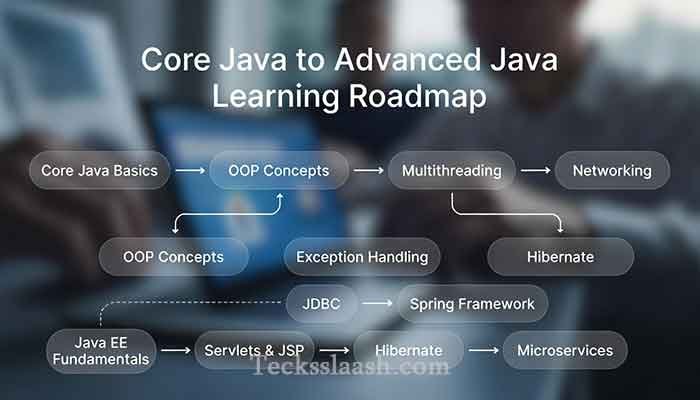
Phase 1 — Java Fundamentals
- History and Features of Java
- JDK, JRE, JVM explained (this is crucial — most beginners skip it)
- Data Types, Variables, Operators
- Control Flow: if-else, switch, loops
Phase 2 — Object-Oriented Programming (The Heart of Java)
- Classes and Objects
- Inheritance, Polymorphism, Abstraction, Encapsulation
- Interfaces and Abstract Classes
- Constructor Chaining
Phase 3 — Core APIs and Advanced Concepts
- String Handling
- Exception Handling (checked vs unchecked — Javatpoint explains this beautifully)
- Collections Framework (ArrayList, HashMap, LinkedList)
- Multithreading and Synchronization
- Java I/O and File Handling
One thing I genuinely appreciate is how Javatpoint gives program output alongside every code example. You don’t need to run the code to understand what it does — which helps when you’re revising quickly before an exam.
Advance Java Tutorial Javatpoint: When You’re Ready to Go Deeper
Once Core Java feels comfortable, the Advance Java Tutorial Javatpoint section is your next stop. This is where things get serious for anyone looking to build web applications or enterprise software.
What Advance Java Covers on Javatpoint
| Topic | What You’ll Learn |
|---|---|
| JDBC | Connect Java apps to MySQL, run queries |
| Servlets | Handle HTTP requests, build server-side logic |
| JSP (Java Server Pages) | Build dynamic web pages |
| Hibernate | ORM framework for database mapping |
| Spring Framework | Dependency injection, MVC architecture |
| Spring Boot | Build REST APIs and microservices |
My honest opinion here — the Spring and Spring Boot sections on Javatpoint are good for getting the concept, but you’ll want to supplement them with a hands-on project or a dedicated course once you’ve read through the theory. Javatpoint gives you the foundation; real projects give you the confidence.
Java Tutorial Javatpoint PDF: Study Offline Without Distractions
One of the most searched things is the Java Tutorial Javatpoint PDF — and for good reason. Not everyone has stable internet access while studying, especially if you’re in a tier-2 or tier-3 city in India.
Javatpoint doesn’t offer one giant downloadable PDF, but there are two practical ways around this:
- Use your browser’s Print → Save as PDF option on individual topic pages. Works perfectly and preserves the formatting.
- Third-party compiled PDFs exist on platforms like SlideShare or Scribd — but verify the source before downloading anything.
Personally, I’d recommend saving the most important sections (OOPs, Collections, Exception Handling) as PDFs for offline revision. It’s a game-changer during exam week when you don’t want internet distractions.
Common Problems & Practical Solutions
Problem 1: Feeling overwhelmed by the number of topics Javatpoint has no structured “course path” — it’s a reference site. Solution: Follow a fixed sequence. Start from the Java Fundamentals page and go topic by topic. Don’t jump around.
Problem 2: Code examples don’t work when you try them locally This usually happens due to Java version mismatches. Make sure you’re using JDK 11 or JDK 17 (LTS versions) and your IDE is configured correctly. Javatpoint’s examples are mostly version-agnostic, but some older Servlet/JSP examples need a Tomcat server setup.
Problem 3: Advanced Java feels disconnected from Core Java A lot of learners hit a wall here. My fix — before moving to JDBC or Servlets, make sure you’re solid on OOP and Exception Handling. Those two concepts are used everywhere in Advanced Java.
Problem 4: No exercises or quizzes to test yourself Javatpoint is theory-heavy. Pair it with platforms like HackerRank or LeetCode for practice problems. Use Javatpoint to understand the concept, then solve 2-3 related problems to reinforce it.
Read More: Deep Learning Tutorials: A Complete Beginner’s Guide
Frequently Asked Questions
Is Javatpoint good for learning Java from scratch?
Yes, absolutely. The Core Java Tutorial Javatpoint section starts from the very basics — JVM, data types, operators — and builds up gradually. It’s one of the most structured free resources available for beginners.
Does Javatpoint cover Java for interviews?
It covers most topics that appear in Java technical interviews — OOPs concepts, Collections, Multithreading, and Exception Handling. For interview-specific prep, I’d supplement it with a dedicated Java interview questions resource.
Is there a Java Tutorial Javatpoint PDF I can download?
Javatpoint doesn’t offer an official PDF download. But you can save individual pages as PDFs using your browser, or search for community-compiled PDFs on Scribd. Always verify the source.
How long will it take to complete Core Java on Javatpoint?
Realistically, 3-4 weeks if you study 2 hours daily and practice code alongside reading. Don’t rush it — understanding OOP concepts properly will save you hours later.
Is Advance Java Tutorial Javatpoint enough for getting a job?
For entry-level roles, yes — especially if you build 1-2 projects using what you learn. But for modern backend development, you’ll eventually need to go deeper into Spring Boot and microservices beyond what Javatpoint covers.
Conclusion: My Final Verdict on Java Tutorial Javatpoint
Javatpoint is like that reliable senior in college who explains everything clearly without making you feel dumb. It’s not the most glamorous resource, and it won’t give you projects or certificates — but as a structured, free reference for Core and Advanced Java, it’s genuinely hard to beat.
My recommendation: use it as your primary theory resource, practice code in parallel, and build at least one small project with every major concept you learn. That combination will take you further than any single course or platform alone.
If you’ve been using Javatpoint or have a tip for fellow learners, I’d love to hear from you — drop your thoughts in the comments below. What’s the one Java topic you found hardest to crack?