Digital Arrest Scam: What It Is & How to Stay Safe
INTRODUCTION
Last year, a relative of mine — a retired government employee, not someone you’d call tech-naive — spent three terrifying hours on a video call with a man posing as a CBI officer. He was told he was under “digital arrest” for a parcel linked to drug trafficking. He nearly transferred ₹2.3 lakh before his son walked in and stopped him.
That moment shook our whole family. And honestly, it’s what pushed me to write this guide.
Digital arrest scams are not just targeting the elderly or the illiterate. They’re targeting engineers, teachers, businesspeople — anyone who can be caught off-guard by the sheer confidence of these fraudsters. In this post, I’ll walk you through exactly what digital arrest is, how the scam plays out step by step, the red flags to watch for, and what you should do if you or someone you know gets targeted.
QUICK SUMMARY TABLE
| Key Point | Details |
|---|---|
| What is it? | A fraud where scammers impersonate law enforcement to trap you on a video call |
| Who’s at risk? | Anyone with a phone — all age groups, all income levels |
| Common impersonations | CBI, ED, Narcotics, TRAI, Customs, Police |
| Goal of the scammer | Extort money through fear and psychological pressure |
| Legal reality | No Indian law enforcement agency conducts “digital arrests” |
| What to do | Hang up. Call 1930 (National Cyber Helpline). Report at cybercrime.gov.in |
MY PERSONAL EXPERIENCE WITH DIGITAL ARREST
I’ll be honest — before my relative’s incident, I had heard the term “digital arrest” but I treated it the way most of us treat news items: something that happens to other people.
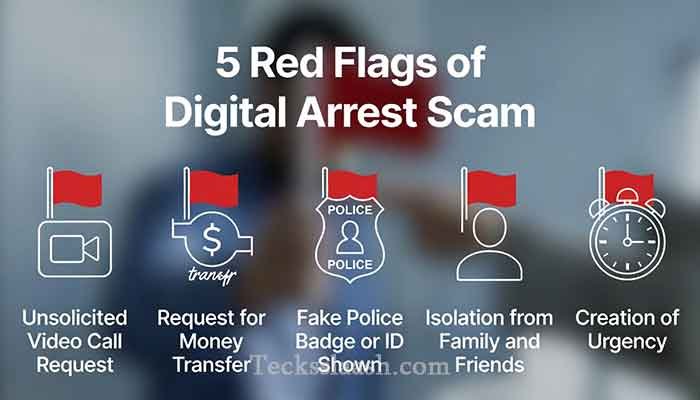
When he called me in a panic midway through that video call, I could hear the “officer” shouting in the background, demanding he stay connected and not tell anyone. The scammer had already told him that speaking to family was a criminal offense.
That’s the genius — and the cruelty — of this scam. It weaponizes isolation. The moment you hang up or tell someone, they lose all power. But they know that, so they work hard to prevent it.
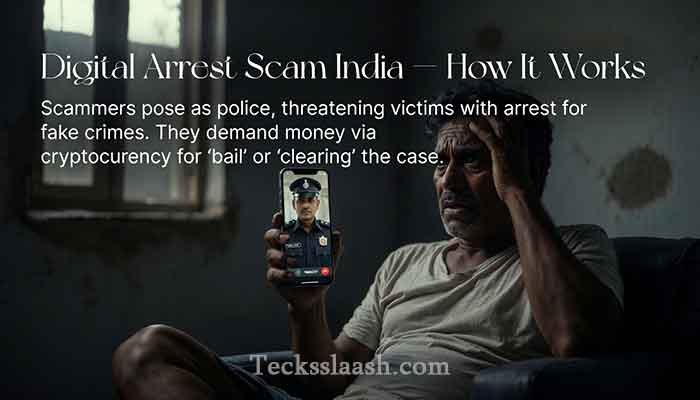
What scared me most was how professional it looked. Fake police uniforms, a backdrop that looked like a real police station, official-sounding case numbers rattling off. If I hadn’t known what digital arrest was, even I might have been rattled.
I spent the next few days researching this extensively, speaking with a cybercrime lawyer friend, and following up on how these operations work. What I found is what you’re about to read.
What Is Digital Arrest, Exactly?
Digital arrest is a cyber fraud technique where criminals call you — usually via WhatsApp or Skype — impersonating law enforcement officers. They claim you’re connected to a serious crime (drug trafficking, money laundering, child pornography, customs violations) and that you are under “digital arrest,” meaning you cannot disconnect the call, leave your home, or contact anyone.
There is no such thing as a digital arrest under Indian law. Period. The Code of Criminal Procedure (CrPC) and the newer BNSS do not contain any provision for keeping someone “under arrest” via a video call. If a real officer needs to speak with you, they come to you in person or send a written summons.
How the Scam Plays Out — Step by Step
Understanding the playbook is your best defense. Here’s how it typically unfolds:
Step 1 — The Initial Call You receive a call, often from an automated voice or a real person claiming to be from TRAI, a courier company, or customs. They tell you a parcel in your name has been seized containing contraband — drugs, fake passports, or illegal goods.
Step 2 — The Transfer to “Authority” The first caller says they’re “escalating” your case to CBI, ED, or Mumbai Crime Branch. You’re transferred to someone in a fake uniform, in front of what looks like a police station backdrop.
Step 3 — Isolation You are told this is a sensitive national security matter. You must stay on the call at all times. Disconnecting, sleeping, or contacting family makes you “look guilty.”
Step 4 — The Psychological Crush Over hours (sometimes overnight), they wear you down. They may show you fake FIRs, fake Supreme Court orders, or fake arrest warrants with your name on them — all generated easily with a basic photo editor.
Step 5 — The “Settlement” Finally, they offer a way out. Pay a “security deposit” or “clearance fee” and your name will be removed from the case. They promise a refund once you’re cleared. You never see that money again.
Who Is Being Targeted?
Based on multiple reports I’ve tracked, the scam disproportionately targets:
- Retirees and senior citizens (seen as less tech-savvy)
- NRIs and people with overseas connections (easier to threaten with international jurisdiction)
- Business owners (larger transfer amounts possible)
- People who’ve recently made large online purchases or used courier services
But younger professionals are not immune. I’ve read documented cases of software engineers losing ₹10–15 lakh to these scams.
Comparison: Real Law Enforcement vs. Digital Arrest Scammers
| Factor | Real Law Enforcement | Digital Arrest Scammers |
|---|---|---|
| Contact Method | Official letter, in-person visit | WhatsApp/Skype call |
| Identity Verification | Verifiable badge, official documentation | Fake uniforms, digital props |
| Asks for Money | Never | Always |
| Communication | Formal, documented | High-pressure, urgent |
| Arrest Process | In-person, with a warrant | Entirely over a call |
| Legal Basis | CrPC / BNSS | None — doesn’t exist |
Read More: Cybercrime.gov.in — India’s official portal to report cyber fraud
What Makes This Scam So Effective?
Three psychological triggers make digital arrest brutally effective:
Fear of authority. Most of us instinctively respect and fear law enforcement. When someone in a uniform cites your Aadhaar number and tells you you’re being investigated, the brain enters panic mode before logic kicks in.
Manufactured urgency. You’re told you have minutes to comply, not hours. Urgency kills rational thinking.
Isolation. Being told “don’t tell your family — this is confidential” cuts you off from the one thing that could save you: someone else’s perspective.
Read More: AI Voice Cloning Scams: How Your Voice Gets Weaponized
COMMON PROBLEMS & PRACTICAL SOLUTIONS
Problem 1: “I Panicked and Stayed on the Call for Hours”
This is the most common situation. The longer you’re on, the more psychologically broken you become.
Solution: The moment someone claims you’re “under digital arrest,” hang up immediately. There is no legal scenario where this is real. Hanging up is not a crime — staying on the call is what puts you at risk.
Problem 2: “They Had My Aadhaar Number and Personal Details — It Must Be Real”
Scammers buy personal data from data breaches. Having your Aadhaar number or address proves nothing about their legitimacy.
Solution: Call the actual agency they claimed to represent. Look up the number yourself — don’t use any number they give you. Real agencies will have no record of your “case.”
Problem 3: “I Already Transferred Money — What Do I Do?”
Time is critical. Every minute matters.
Solution: Call 1930 (India’s Cyber Crime Helpline) immediately. File a complaint at cybercrime.gov.in. Contact your bank’s fraud department right away to attempt a transaction reversal. Many people recover funds if they act within the first few hours.
Problem 4: “My Elderly Parent Won’t Believe It’s a Scam”
Scammers are so convincing that victims sometimes defend them even after being told the truth.
Solution: Show them this article. More importantly, show them Prime Minister Modi’s own public statement warning Indians about digital arrest scams — it carries weight for the generation that trusts official sources. [Internal Link: “How to Talk to Your Parents About Cyber Safety”]
FREQUENTLY ASKED QUESTIONS
What is digital arrest in simple words?
Digital arrest is a scam where fraudsters call you pretending to be police or government officials, tell you you’re under “digital arrest” for a fake crime, keep you trapped on a video call, and eventually demand money to “clear your name.” No such legal concept exists in India.
Digital arrest kya hota hai?
Digital arrest ek cyber fraud hai jisme scammers khud ko CBI, ED ya police ka officer batate hain aur aapko video call par rok ke bolte hain ki aap ek crime mein involved hain. Yeh bilkul fake hota hai — Indian law mein digital arrest jaisi koi cheez exist hi nahi karti.
Can police actually arrest you through a video call?
No. Indian law enforcement cannot arrest you via a phone or video call. An arrest requires physical presence, a valid warrant, and proper procedure under BNSS (formerly CrPC). Anyone claiming otherwise is a fraudster.
What should I do if I receive a digital arrest call?
Hang up immediately. Do not transfer any money. Call the Cyber Crime Helpline at 1930. Report the incident at cybercrime.gov.in. Note down the number that called you and any names they gave.
How are scammers getting my personal information?
Most likely through data breaches from apps, websites, or even telecom records sold illegally. Having your personal details does not make a caller legitimate. Always verify independently.
CONCLUSION
Digital arrest is one of the most psychologically sophisticated scams I’ve come across — and it’s evolving fast. The people running these operations are organized, well-funded, and incredibly convincing. But now that you know how the playbook works, you hold the power.
My final take: The single most effective thing you can do is tell five people about this scam today. Your parents. Your colleagues. Your neighbors. Because awareness is the only thing that breaks the psychological trap before it snaps shut.
If you ever get a call like this, remember: real cops don’t arrest you over WhatsApp. Hang up. Call 1930.
And if this article helped you, or if you have your own story about a digital arrest scam attempt — I’d genuinely love to hear it. Drop it in the comments below. Your experience might just be the thing that saves someone else.