Telegram Scams: How to Spot, Avoid & Report Them
If you’ve been on Telegram lately, you’ve probably noticed something feels a little off. Random messages from “investment experts,” fake job offers, crypto giveaways from accounts pretending to be Elon Musk — the platform has become a goldmine for scammers, and honestly, it’s getting worse by the month.
Telegram scams are fraudulent schemes carried out through the Telegram messaging app, and they’re more sophisticated than most people expect. Unlike SMS phishing, these scammers build fake communities, impersonate real brands, and sometimes spend weeks earning your trust before they make their move.
In this post, I’ll walk you through what Telegram scams actually look like, share something that happened close to home that opened my eyes, and give you a practical guide to avoid and report them.
At a Glance: Telegram Scams Quick Summary
| Category | Details |
|---|---|
| Platform | Telegram (iOS, Android, Web) |
| Most Common Scam | Fake crypto investment & job offer scams |
| Primary Target | Users aged 18–40, especially in India |
| Red Flag #1 | Unsolicited messages promising money or jobs |
| Red Flag #2 | Requests for OTPs, UPI IDs, or personal data |
| How to Report | Telegram’s in-app report + Cybercrime.gov.in |
| Risk Level | High — losses can run into lakhs |
My Personal Experience with Telegram Scams
A few months back, a close friend of mine — smart guy, works in IT — got added to a Telegram group out of nowhere. The group was called something like “NSE Premium Signals 🔥” and had around 4,000 members. For two weeks, they posted “free stock tips” that actually seemed to work. Small gains, nothing suspicious.
Then came the ask: a paid “VIP tier” where you invest a minimum of ₹25,000 through a link to what looked like a legitimate trading app. My friend didn’t fall for it, but someone in his network lost ₹1.8 lakh before realizing the app was completely fake and the “4,000 members” were bots.
What scared me was how normal it all looked. That’s the real danger with Telegram scams — they don’t look like scams. They look like communities.
The Most Common Types of Telegram Scams
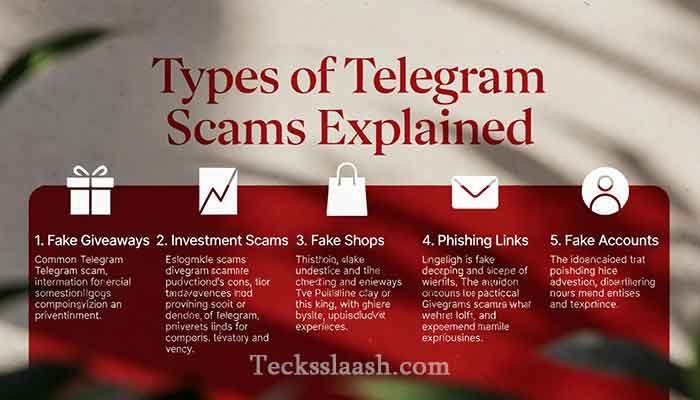
1. Fake Investment & Crypto Groups
This is the big one right now. Scammers create groups promising guaranteed returns on stocks, crypto, or forex. They use fake testimonials, manufactured urgency (“offer closes tonight!”), and sometimes even fake celebrity endorsements.
If anyone is guaranteeing returns on any investment platform — walk away immediately. SEBI-registered advisors are legally not allowed to guarantee returns.
2. Job Offer Scams
You get a message: “Work from home, earn ₹800–₹1500 per task, no experience needed.” Sounds harmless. But soon they ask for a “registration fee” or your bank details to “transfer your salary.” There’s no job. There’s only a trap.
These are especially targeting college students and recent graduates in India right now.
3. Impersonation Scams
Scammers clone the profiles of real people — your bank’s customer support, a YouTube creator you follow, even your boss. They’ll message you on Telegram asking for an OTP, a payment, or sensitive information.
Always verify through official channels before responding to anyone claiming to be from an institution.
4. Romantic / Pig Butchering Scams
Someone befriends you over weeks, builds emotional trust, then eventually steers the conversation toward a “great investment opportunity.” This is called pig butchering — they fatten you up before the slaughter. It’s brutal, and it’s devastatingly effective.
5. Fake Giveaways & Airdrops
“Send 0.1 ETH, get 1 ETH back.” No legitimate crypto project ever works this way. Ever.
Telegram Scam Tactics: A Comparison Table
| Scam Type | Bait Used | What They Actually Want |
|---|---|---|
| Investment Groups | High returns, “proof” of profits | Money via fake apps/UPI |
| Job Offer Scams | Easy WFH income | Registration fees, bank details |
| Impersonation | Urgency, authority | OTPs, passwords, transfers |
| Romantic Scams | Emotional connection | Large investment “commitment” |
| Fake Giveaways | Free crypto/prizes | Wallet access or small upfront payment |
How to Avoid Telegram Scams: Rules I Personally Follow
These aren’t generic tips. These are things I actually do.
Never trust unsolicited messages. If someone you don’t know messages you on Telegram — even if their profile looks legit — treat it as suspicious by default. Real opportunities don’t arrive in your DMs uninvited.
Check the group member count vs. engagement ratio. A group with 10,000 members but only 3 people commenting? That’s a bot farm. Legitimate communities have messy, organic conversations.
Never share OTPs — not even with “support.” Your bank, Telegram, UPI apps — none of them will ever ask for an OTP via chat. If someone does, end the conversation immediately.
Use Telegram’s privacy settings. Go to Settings → Privacy and Security → disable “Who can add me to groups” to “My Contacts.” This alone will block most scam group additions.
Reverse-search profile photos. If someone’s profile pic looks suspiciously professional, do a Google reverse image search. Scammers often steal stock photos or real people’s pictures.
How to Report Telegram Scams
Reporting matters — not just for you, but for protecting others. Here’s exactly how to do it.
Inside Telegram:
- Open the chat or group
- Tap the name/profile at the top
- Scroll down → tap “Report”
- Select the appropriate reason (Spam, Fraud, etc.)
To Indian Cybercrime Authorities:
- Visit cybercrime.gov.in — India’s official portal for reporting online fraud
- You can also call the national cybercrime helpline: 1930
- File a complaint with your local police station under IT Act sections 66C/66D
To Your Bank (if money was transferred): Report immediately to your bank’s fraud helpline and request a chargeback or hold on the transaction. Speed matters here — the faster you report, the better your chances of recovery.
Read More: Report Telegram fraud directly at cybercrime.gov.in
Common Problems & Practical Solutions
Problem 1: “I already sent money. What do I do?” Call 1930 immediately. Then notify your bank. Don’t transfer any more money, even if the scammer says it’ll “unlock” your previous funds — that’s a recovery scam layered on top of the original one.
Problem 2: “I gave out my OTP. Am I compromised?” Yes, potentially. Change your Telegram password and enable two-step verification right now (Settings → Privacy and Security → Two-Step Verification). Also change your email password and alert your bank.
Problem 3: “I’m not sure if a group is legitimate.” Search for the group’s name + “scam” on Google. Check if the admin’s contact info matches any real registered company. Look up the SEBI registration number if it claims to offer investment advice — all real advisors are listed on sebi.gov.in.
Problem 4: “I feel embarrassed to report it.” Please don’t be. These scammers are professionals. Smart, educated people fall for these every single day. Reporting it is the responsible thing to do — for you and for whoever gets targeted next.
Read More: PPT on Cyber Security: Make Slides Students Actually Love
Frequently Asked Questions
Q: Can Telegram itself be held responsible for scams on its platform?
Telegram provides tools to report abuse, but as a platform it has limited liability for user-to-user fraud. Your best recourse is cybercrime.gov.in and your bank’s fraud department.
Q: Are Telegram bots used in scams?
Absolutely. Scammers use bots to simulate active group members, automate fake testimonials, and even handle initial conversations before a human takes over. If replies feel weirdly fast or scripted, that’s a red flag.
Q: What is the most common Telegram scam in India right now?
From what I’ve seen and read, fake stock market signal groups and part-time job task scams are the most rampant in India as of 2025. Both often funnel victims toward fake UPI payment portals.
Q: Will Telegram freeze or ban scammer accounts if I report them?
Telegram does take action on reported accounts, especially those reported by multiple users. It won’t be instant, but reporting does matter and helps the platform’s moderation team.
Q: Is it safe to use Telegram at all?
Yes — Telegram itself is a legitimate app used by millions for valid reasons. The problem is scammers exploit its open-group structure and anonymity. Use it smartly, with your privacy settings locked down, and you’ll be fine.
Conclusion: Don’t Let Scammers Win
Telegram scams have evolved from obvious phishing attempts to sophisticated, long-running psychological operations. The best defense isn’t paranoia — it’s awareness and a few firm rules you never break.
My final take: treat any unsolicited financial opportunity on Telegram as a scam until proven otherwise. Enable two-step verification today if you haven’t. And if something goes wrong, report it fast and without shame.
Got a Telegram scam experience of your own — or a warning sign I missed? Drop it in the comments below. Your story might save someone else from losing their hard-earned money.